
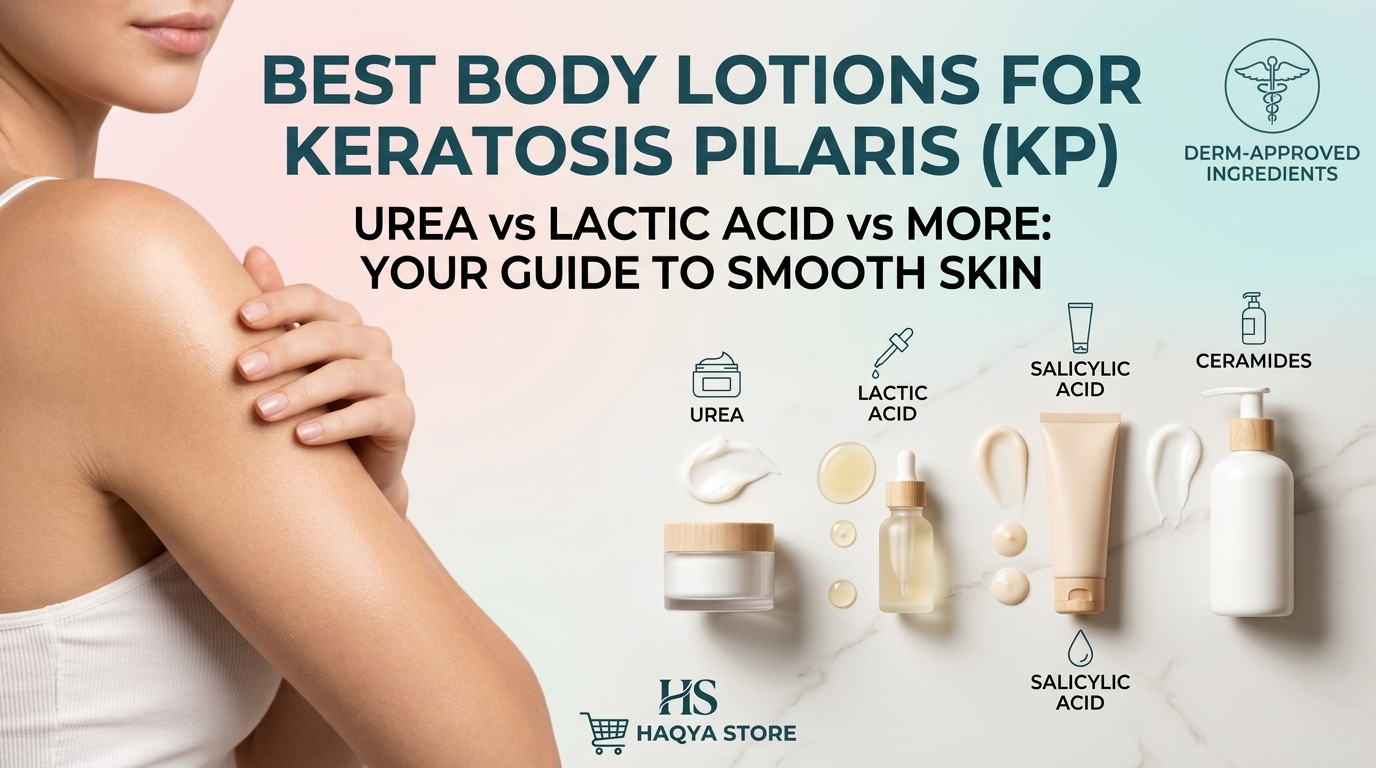
Best Body Lotions for Keratosis Pilaris (KP): Urea vs Lactic Acid vs More

Last updated: [DATE]
Disclosure: As an Amazon Associate I earn from qualifying purchases. If you click a link on this page and buy something, I may earn a small commission at no extra cost to you. This never changes my recommendations, and I list the downsides of every product type too. Read our full Affiliate Disclosure.
Those small, rough bumps on the backs of your arms or thighs, the ones that feel like sandpaper no matter how much lotion you use. If that sounds familiar, you may be dealing with keratosis pilaris (KP), a very common and harmless skin texture concern, and you are probably searching for the right body lotion for keratosis pilaris.
The frustrating part is that the shelf is crowded with “smoothing” lotions, and they are not all built the same. Some focus on moisture, some on gentle exfoliation, and some do both.
This guide is decision-first: we compare the four main ingredient types of body lotion for keratosis pilaris, who each one suits, and where each one falls short. If you’re in a hurry, jump straight to the table.
Note: this guide is based on ingredient information, product specs and common customer feedback patterns, not on personal lab testing. It is general information, not medical advice. See how we review products.
Quick Comparison: Body Lotion for Keratosis Pilaris by Type
| Type | Best For | Watch Out For | Check It |
|---|---|---|---|
| Urea lotion or cream | Rough, dry, bumpy skin that needs both moisture and smoothing | Higher strengths can sting on broken or freshly shaved skin | Check Price on Amazon |
| Lactic acid lotion | Gentle exfoliation for stubborn rough texture | Can increase sun sensitivity, so daily sunscreen matters | Check Price on Amazon |
| Salicylic acid body wash or lotion | Clogged-looking bumps, or skin that is also breakout-prone | Can feel drying, and is not ideal for very dry or sensitive skin | Check Price on Amazon |
| Ceramide barrier moisturizer | Sensitive skin, or as a daily base alongside an active | Hydrates well but does little for texture on its own | Check Price on Amazon |
Prices change often, so please check the current price on Amazon before you decide.
What Is Keratosis Pilaris (KP)?
KP is a common skin texture concern that shows up as small, rough bumps, often on the upper arms, thighs and cheeks. It is generally harmless, and it often looks more noticeable when skin is dry. A consistent routine can help skin feel smoother and more comfortable, but results vary from person to person, and no product can promise to make it disappear. For general background from dermatologists, see the American Academy of Dermatology’s tips on keratosis pilaris.
1. Urea Lotion or Cream
Urea is a moisturizing ingredient that also helps loosen rough, dead skin, which is why it comes up so often in KP-focused routines. The percentage is usually shown on the front of the label.
Best for
People whose rough, bumpy skin also feels dry, tight or flaky.
Pros
- Combines hydration with a gentle smoothing effect
- Often available in simple, fragrance-free formulas
Cons
- Higher percentages can sting on irritated skin, freshly shaved skin or small cuts
- Textures can be thick or slightly sticky
- Any difference usually takes weeks of regular use, not days
Who it fits
Dry skin types, and anyone who wants one product that covers both moisture and texture.
2. Lactic Acid Lotion
Lactic acid is an AHA (alpha hydroxy acid) that works as a gentle exfoliant while also helping skin hold onto moisture.
Best for
People who want smoother-feeling skin and don’t mind a short adjustment period.
Pros
- Gently helps loosen the buildup that makes skin feel rough
- Often paired with hydrating ingredients
- Many formulas are designed for regular use
Cons
- Can make skin more sensitive to the sun, so use sunscreen on exposed areas
- May tingle at first, especially on sensitive skin
- Using it alongside other exfoliants can lead to irritation
Who it fits
Normal to dry skin that tolerates active ingredients well.
3. Salicylic Acid Body Wash or Lotion
Salicylic acid is a BHA (beta hydroxy acid). It is oil-soluble, so it is often used on skin that feels bumpy and clogged.
Best for
Bumps that look like small whiteheads, or rough skin that also gets occasional breakouts.
Pros
- Works within pores more than the other options in this guide
- Wash-off formats are easy to fit into a shower routine
- Often budget-friendly
Cons
- Can be drying, so follow with a moisturizer
- Not a great match for very dry or eczema-prone skin
- If you are pregnant or breastfeeding, check with your doctor before using it
Who it fits
Oilier or breakout-prone skin that also has rough, bumpy patches.
4. Ceramide Barrier Moisturizer
This one doesn’t exfoliate. Its job is to keep your skin barrier comfortable, which matters because dry skin tends to make KP look more noticeable.
Best for
Sensitive skin, or as the daily base that sits alongside a urea or lactic acid product.
Pros
- Usually gentle and fragrance-free
- Easy to layer with an active product
- Helps with the dryness that often comes with rough skin texture
Cons
- Won’t do much for texture by itself
- Some people expect visible smoothing from it, and it isn’t designed for that
Who it fits
Sensitive or reactive skin, and people who prefer a simple routine.
Buying Guide: How to Choose a Body Lotion for Keratosis Pilaris
1. Your skin type first
Dry skin usually does better with urea or ceramides. Oilier or breakout-prone skin may prefer salicylic acid.
2. Ingredient percentage
Labels often show urea or acid percentages. Starting lower and building up is usually more comfortable than starting strong.
3. Fragrance-free formulas
Fragrance is a common cause of irritation, especially if your skin is already rough or sensitive.
4. Texture
If a lotion feels too heavy, you may not use it regularly, and consistency matters most for skin texture.
5. Size and value
You’ll be covering arms and legs, so check the container size and how long it is likely to last.
6. Read reviews closely
Look at reviews from people with KP specifically, and check what they say about stinging, sticky textures and how long it took to notice a difference.
7. Avoid harsh scrubbing
Aggressive scrubbing can irritate the skin. Gentle options and low-strength exfoliating ingredients are usually a safer starting point.
8. Patch test first
Try any new product on a small area for a day or two before using it more widely.
Frequently Asked Questions
Can KP go away permanently?
No product can promise that. KP is usually a long-term, harmless texture concern that often looks better with age. A consistent routine can help skin feel smoother, but results vary from person to person.
How long before a body lotion for keratosis pilaris shows a difference?
Most people need several weeks of consistent use before noticing any change in texture. If your skin becomes red, itchy or sore, reduce how often you use the product or stop using it.
Should I see a doctor?
If the bumps are painful, spreading, very red or itchy, or you’re unsure what you have, it’s worth asking a dermatologist or doctor. The same goes if you are pregnant, breastfeeding, or have a skin condition such as eczema, before trying exfoliating acids.
Final Thoughts
When choosing a body lotion for keratosis pilaris, a urea lotion is the easiest starting point for most people because it combines moisture and smoothing. If you tolerate exfoliating acids well, lactic acid is a solid alternative. Salicylic acid suits clogged-looking bumps, and a ceramide moisturizer works as a gentle base for any routine.
Prices change often, so check the current price on Amazon before you decide.
Which body lotion for keratosis pilaris have you tried, and what worked for you? Leave a comment below.
This article is for general information only and is not medical advice. If you have concerns about your skin, please speak with a qualified healthcare professional.