
Best Hair Dryers for Fine Hair: How to Choose One

How we researched this guide: We did not hands-on test any hair dryer in this guide. It is based on published advice from health and consumer sources and on independent editorial roundups, all linked in the Sources section. Where we could not confirm a detail, we say so. If we ever test a model ourselves, we will label it Hands-on Tested. Read how we review products.
Affiliate disclosure: HaqyaStore does not currently earn commission from any links, and this guide contains no affiliate links. See our Affiliate Disclosure for our current status.
If you are comparing the best hair dryers for fine hair, the most useful question is not which brand is famous but which dryer lets you control heat and airflow. Fine hair is easy to weigh down, and heat can damage hair, so the goal is a dryer that helps you dry gently while keeping some lift at the roots.
This guide explains what to look for, what to avoid, how to compare models, and which dryers appeared in independent editorial roundups. It is part of our hair dryer guides.
What makes a hair dryer suitable for fine hair?
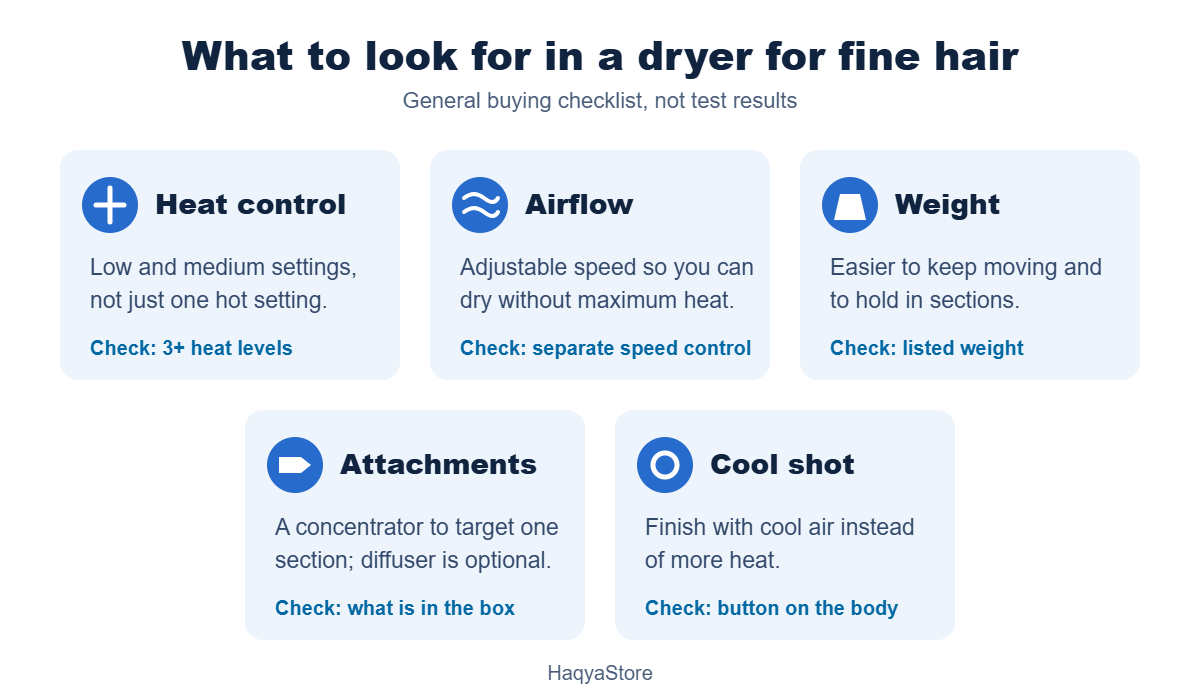
No source we reviewed defines a single “fine hair” dryer. What the sources do agree on is that heat can damage hair and that using lower heat and limiting heat styling is safer. So a suitable dryer is one that gives you control: several heat settings, adjustable airflow, a cool shot, a nozzle that targets one section, and a weight you can handle comfortably. The checklist below summarises these features.
Heat settings and airflow
Heat settings
The American Academy of Dermatology (AAD) advises limiting blow-drying and heat tools, choosing low or medium heat, and using a heat protectant. A dryer with at least low, medium and high settings lets you follow that advice. A dryer with only one hot setting does not.
Head & Shoulders, a hair-care brand, explains why overheating very damp hair is a risk: the water inside the strand can boil and cause damage often called “bubble hair”. That is a brand explanation, so treat it as general background rather than a measured result.
Airflow and speed settings
Many dryers let you set airflow speed separately from temperature. This matters because it lets you choose a lower heat and still control how quickly air moves. We did not find independent evidence in our sources that higher wattage or maximum power is better for fine hair, so we treat adjustable speed as something to check rather than a promise of better results.
Weight, handling and attachments
Manufacturers list a dryer’s weight on its product page. A lighter dryer is easier to hold and keep moving, which helps you avoid holding heat on one spot. That is common-sense guidance, not a test finding, and we have not verified the weights of the models below.
Attachments are worth checking too. A concentrator nozzle directs air so you can dry one section at a time. A cool shot button lets you finish with cool air instead of more heat. A diffuser is optional and some people use it for texture. Check what is included in the box before you compare prices.
Labels such as ionic, ceramic and tourmaline appear on many dryers. We did not find independent testing of their real-world benefit in the sources we reviewed, so we treat heat control, airflow control and weight as the first things to compare.
What to avoid
- Using the highest heat setting by default. The AAD advises low or medium heat.
- Rubbing hair with a towel. The AAD advises wrapping or blotting instead, because vigorous rubbing can cause damage.
- Holding the dryer on one spot. Keep it moving and work in sections.
- Relying on marketing labels alone. Ionic, ceramic and tourmaline claims are not a substitute for checking heat and airflow controls.
- Assuming an editor’s pick suits you. Roundups reflect an editor’s opinion and may be written for another country.
How to compare hair dryers
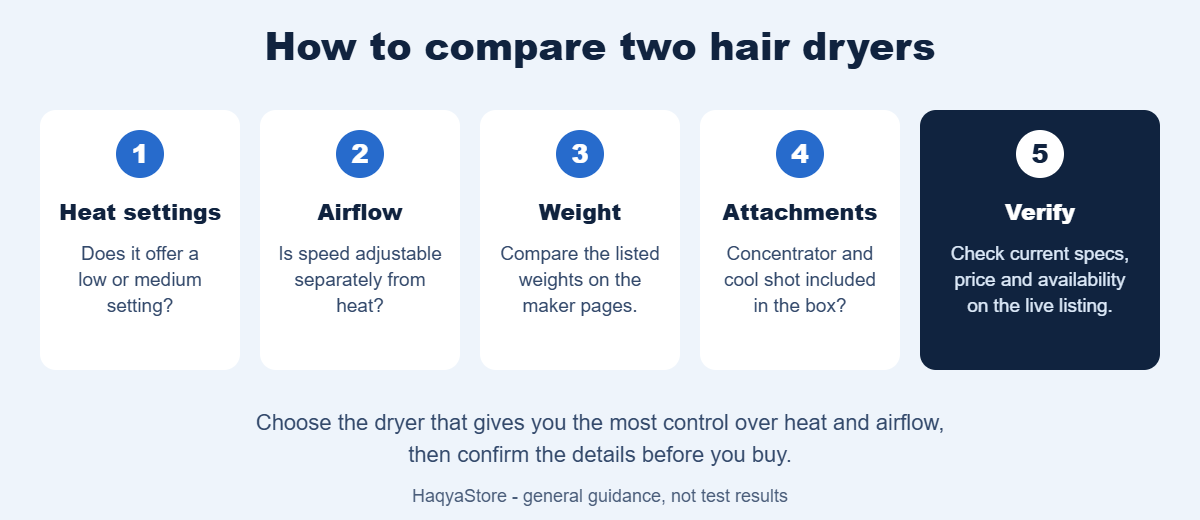
Use the same five checks on every model, then verify the details on the manufacturer’s page and the current retailer listing, because specifications, prices and availability change.
Best hair dryers for fine hair: models reviewers mention
These are not our tested picks. They are models that appeared in independent editorial roundups, listed so you can check current specifications and availability yourself. A placement in a roundup is the publisher’s opinion, not our finding. We have not verified prices, ratings or review counts, so none are shown, and a model may not be sold in your country.
| Model | What the cited source says | What we have verified |
|---|---|---|
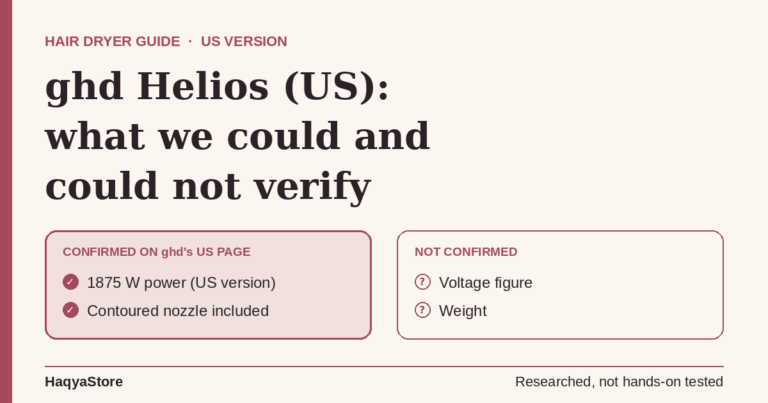
| ghd Helios | Woman&Home names the ghd Helios its best overall hair dryer for fine hair (page last updated 28 September 2026). PriceSpy UK lists the GHD Helios Professional 5th in its Top 5 hair dryers (updated 1 October 2026) and notes it dropped three positions. | Roundup placement only. Specifications and current price: not verified. |
| Shark FlexStyle 5-in-1 Air Styler | Grazia UK names it the best overall hair dryer in a general roundup. That roundup is not specific to fine hair, and the FlexStyle is an air styler with attachments. | Roundup placement only. Specifications, suitability for fine hair and price: not verified. |
| T3 Featherweight Compact Folding Hair Dryer | Woman&Home names it the best travel hair dryer for fine hair. | Roundup placement only. Weight, heat settings and price: not verified. |
Researched or tested: what this guide covers
Everything in this guide is researched, not tested. We read the sources listed below and report what they say. We have not used these dryers, measured their heat or airflow, or compared them side by side. Our review method and editorial policy explain the two labels we use, Hands-on Tested and Researched, not tested, and our About page explains who we are and what HaqyaStore does.
How to blow-dry fine hair with less heat
Steps 1 to 3 and 6 follow AAD guidance. Steps 4 and 5 are general technique tips, not findings from a study.
- Dry gently first. Wrap or blot hair with a towel or soft t-shirt instead of rubbing it.
- Use a heat protectant if you use heat tools regularly.
- Choose low or medium heat rather than the highest setting.
- Keep the dryer moving and do not hold it close to one spot.
- Work in sections so you do not repeatedly heat the same area.
- Limit how often you use heat. Fewer hot sessions is the simplest way to be gentler.
Evidence on blow-drying versus air-drying is not settled. Consumer Reports says there is little evidence that either method is clearly better for hair health, and that the choice depends on hair type, texture, hairstyle and goals. It also notes that heavily processed hair may be more damaged by hot tools than by air-drying. If your hair is very fragile or heavily processed, ask a hairstylist or dermatologist.
FAQ
What is the best hair dryer for fine hair?
There is no single answer. Look for adjustable heat, adjustable airflow, a cool shot, a concentrator and a weight you can handle comfortably. The models above are ones that reviewers mention; we have not tested them.
Is a more powerful dryer better for fine hair?
Not necessarily. We did not find independent evidence in our sources that higher wattage is better for fine hair. Controllable heat and airflow are more useful to compare.
Do ionic dryers help fine hair?
Ionic technology is widely marketed, but we did not find independent evidence of its benefit in the sources we reviewed. Compare heat and airflow control first.
Is it better to air-dry fine hair?
Experts and research are mixed. Consumer Reports says there is little evidence that either method is clearly better. Choose based on your hair, and ask a hairstylist or dermatologist if your hair is fragile.
Can I use a regular dryer on fine hair?
Many people do. Use low or medium heat, keep the dryer moving and avoid the highest setting.
Keep reading
Sources
- American Academy of Dermatology: tips for healthier hair
- Consumer Reports: blow-drying vs air-drying
- Head & Shoulders: heat damage and bubble hair (brand source)
- Woman&Home: best hair dryers for fine hair
- Grazia UK: best hairdryers
- PriceSpy UK: best hair dryers
Sources were checked on 8 October 2026. Roundups and rankings change, so their current content may differ.
2 Comments